LÄS MER OM PRODUKTENProduktinformation
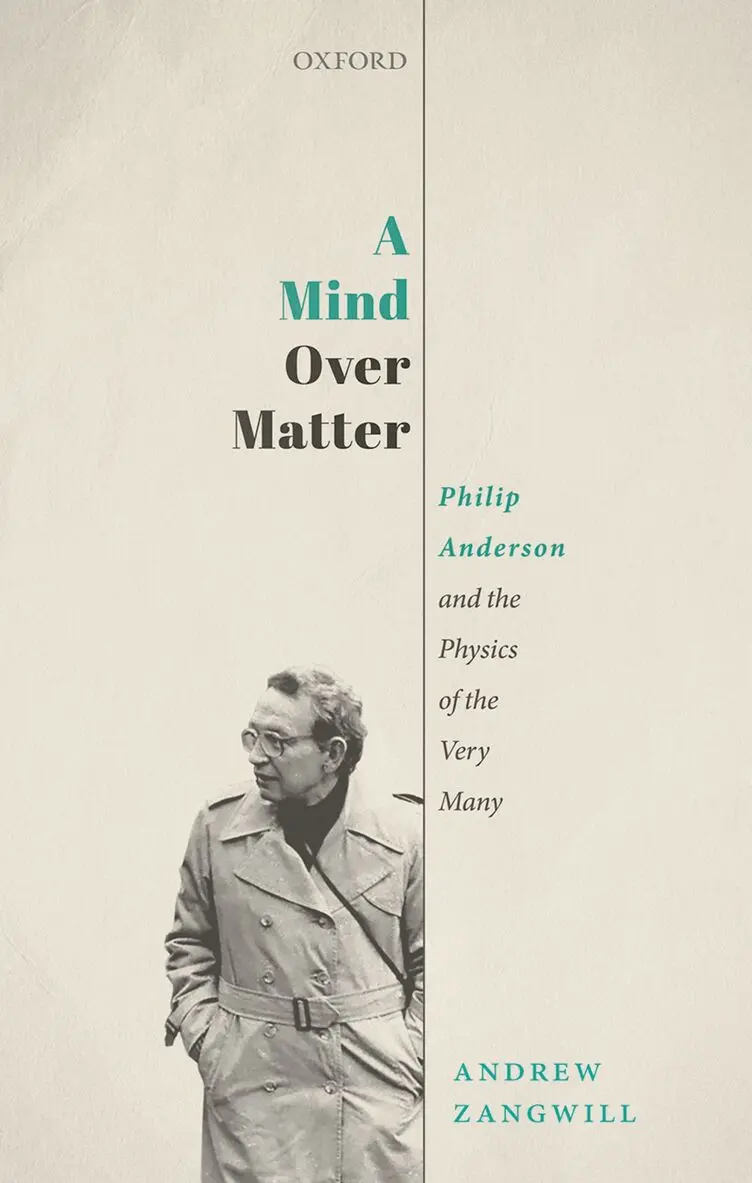
A Mind Over Matter is a biography of the Nobel-prize winner Philip W. Anderson, a person widely regarded as one of the most accomplished and influential physicists of the second half of the twentieth century. Anderson (1923-2020) was a theoretician who specialized in the physics of matter, including window glass and metals, magnets and semiconductors, liquid crystals and superconductors. More than any other single person, Anderson transformed the patchwork subject of solid-state physics into the deep, subtle, and coherent discipline known today as condensed matter physics. Among his many world-class research achievements, Anderson discovered an aspect of wave physics that had been missed by all previous scientists going back to Isaac Newton. He became a public figure when he testified before Congress to oppose its funding of an expensive project intended exclusively for particle physics research. Over the years, he published many articles designed to influence a broad audience about issues where science impacted public policy and culture. Anderson grew up in the American mid-west, was educated at Harvard, and rose to the pinnacle of his profession during the first decade of his thirty-five career as a theoretical physicist at Bell Telephone Laboratories. Almost uniquely, he spent many years working half-time as a professor at the University of Cambridge and at Princeton University. The outspoken Anderson enjoyed broad influence outside of physics when he helped develop and champion the concepts of emergence and complexity as organizing principles to help attack very difficult problems in technically challenging disciplines.