LÄS MER OM PRODUKTENProduktinformation
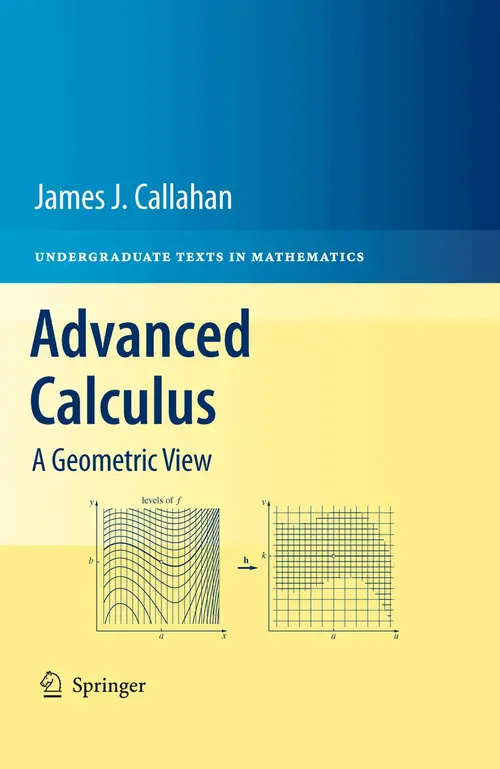
A half-century ago, advanced calculus was a well-de?ned subject at the core of the undergraduate mathematics curriulum. The classic texts of Taylor [19], Buck [1], Widder [21], and Kaplan [9], for example, show some of the ways it was approached. Over time, certain aspects of the course came to be seen as more signi?cant-those seen as giving a rigorous foundation to calculus-and they - came the basis for a new course, an introduction to real analysis, that eventually supplanted advanced calculus in the core. Advanced calculus did not, in the process, become less important, but its role in the curriculum changed. In fact, a bifurcation occurred. In one direction we got c- culus on n-manifolds, a course beyond the practical reach of many undergraduates; in the other, we got calculus in two and three dimensions but still with the theorems of Stokes and Gauss as the goal. The latter course is intended for everyone who has had a year-long introduction to calculus; it often has a name like Calculus III. In my experience, though, it does not manage to accomplish what the old advancedcalculus course did. Multivariable calculusnaturallysplits intothreeparts:(1)severalfunctionsofonevariable,(2)one function of several variables, and (3) several functions of several variables. The ?rst two are well-developed in Calculus III, but the third is really too large and varied to be treated satisfactorily in the time remaining at the end of a semester. To put it another way: Green's theorem ?ts comfortably; Stokes' and Gauss' do not.