LÄS MER OM PRODUKTENProduktinformation
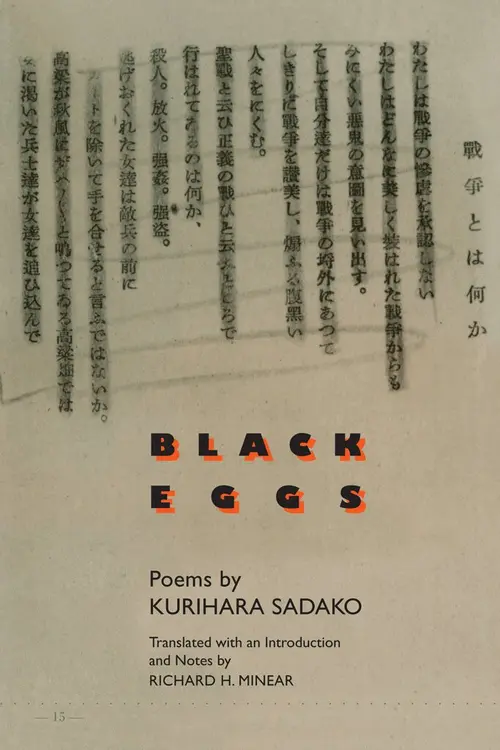
Kurihara Sadako was born in Hiroshima in 1913, and she was there on August 6, 1945. Already a poet before she experienced the atomic bombing of Hiroshima, she used her poetic talents to describe the blast and its aftermath. In 1946, despite the censorship of the American Occupation, she published Kuroi tamago (Black Eggs), poems from before, during, and immediately after the war. This volume includes a translation of Kuroi tamago from the complete edition of 1983. But August 6, 1945, was not the end point of Kurihara's journey. In the years after Kuroi tamago she has broadened her focus-to Japan as a victimizer rather than victim, to the threat of nuclear war, to antiwar movements around the world, and to inhumanity in its many guises. She treats events in Japan such as politics in Hiroshima, Tokyo's long-term complicity in American policies, and the decision in 1992 to send Japanese troops on U.N. peacekeeping operations. But she also deals with the Vietnam War, Three Mile Island, Kwangju, Greenham Common, and Tiananmen Square. This volume includes a large selection of these later poems. Kurihara sets us all at ground zero, strips us down to our basic humanity, and shows us the world both as it is and as it could be. Her poems are by turns sorrowful and sarcastic, tender and tough. Several of them are famous in Japan today, but even there, few people appreciate the full force and range of her poetry. And few poets in any country-indeed, few artists of any kind-have displayed comparable dedication, consistency, and insight.