LÄS MER OM PRODUKTENProduktinformation
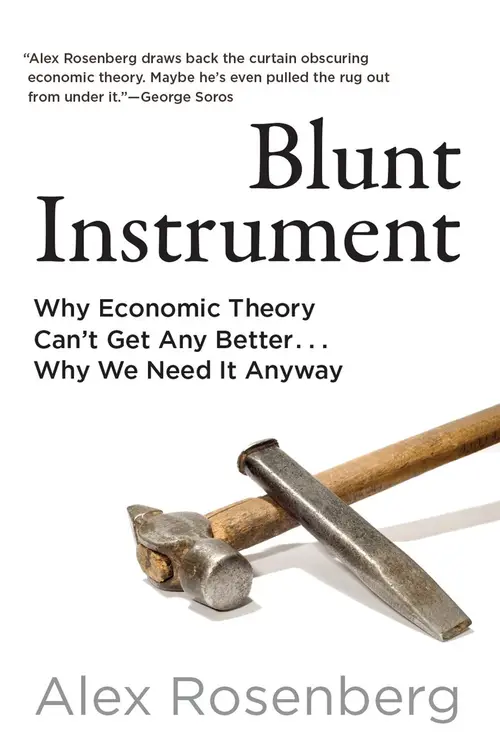
Why economic theory-with no track-record of predictive success-is still an indispensable tool for protecting civilized life.Economic theory has never gotten any better at prediction. Its explanations are always after the fact. The mathematical models economists have devoted themselves to for more than a century can't be improved to enhance their empirical relevance. But from this research program that never paid off, a very useful tool has emerged-game theory. It's just what civilized society needs to protect itself from the rapaciousness that condemns all markets to fail. In Blunt Instrument, Alex Rosenberg helps explain to outsiders exactly what they need to make sense of economic theory, and why despite its failures, it's still indispensable.Economic theory is something we all should understand because the economy affects us all, and it is economic theorists who shape that economy for good or ill. No less an economist than John Maynard Keynes expressed the point in a memorable quotation: "Practical men, who believe themselves to be quite exempt from any intellectual influence, are usually the slaves of some defunct economist." This book draws back the curtain from the math and the graphs that deliver microeconomic and macroeconomic models. It demystifies the formidable-looking equations, explaining the reasoning behind the math so that outsiders can decide on the theory's importance to their own thinking about the economy. Finally, it shows how game theory-the study of strategic choice-emerged from the outlandish idealizations of economic theory. Most importantly, it illuminates how game theory both mitigates the failures of real-world economies and improves the design of important human institutions.