LÄS MER OM PRODUKTENProduktinformation
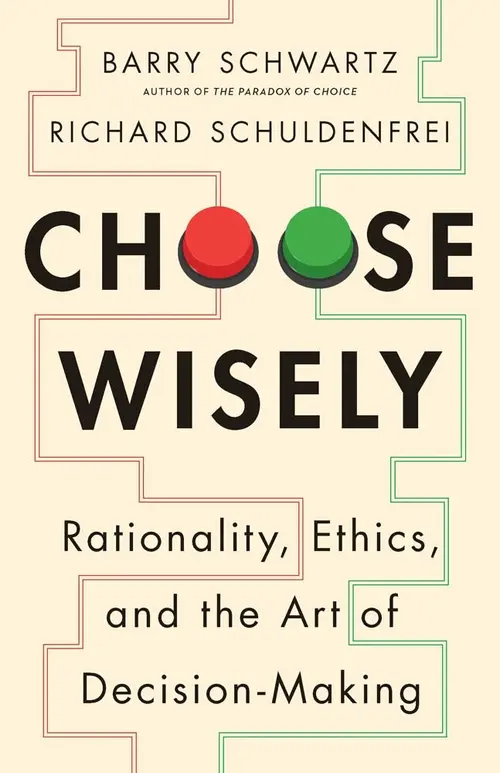
A leading psychologist and philosopher challenge the shortcomings of rational choice theory-and propose a new framework for understanding decision-makingFor many decision scientists, their starting point-drawn from economics-is a quantitative formula called rational choice theory, allowing people to calculate and choose the best options. The problem is that this framework assumes an overly simplistic picture of the world, in which different types of values can be quantified and compared, leading to the "most rational" choice. Behavioral economics acknowledges that irrationality is common but still accepts the underlying belief from economics of what a rational decision should look like.In this book, Barry Schwartz and Richard Schuldenfrei offer a different way to think about the choices we make every day. Drawing from economics, psychology, and philosophy-and both inspired by and challenging Daniel Kahneman's Thinking, Fast and Slow-they show how the focus on rationality, narrowly understood, fails to fully describe how we think about our decisions, much less help us make better ones. Notably, it overlooks the positive contribution that framing-how we determine what aspects are most important to us-contributes to good decisions. Schwartz and Schuldenfrei argue that our choices should be informed by our individual "constellation of virtues," allowing for a far richer understanding of the decisions we make and helping us to live more integrated and purposeful lives.