LÄS MER OM PRODUKTENProduktinformation
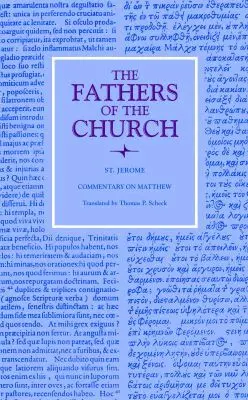
St. Jerome (347-420) has been considered the pre-eminent scriptural commentator among the Latin Church Fathers. His Commentary on Matthew, written in 398 and profoundly influential in the West, appears here for the first time in English translation. Jerome covers the entire text of Matthew's gospel by means of brief explanatory comments that clarify the text literally and historically. Although he himself resided in Palestine for forty years, Jerome often relies on Origen and Josephus for local information and traditions. His stated aim is to offer a streamlined and concise exegesis that avoids excessive spiritual interpretation.Jerome depends on the works of a series of antecedent commentators, both Greek and Latin, the most important of whom is Origen, yet he avoids the extremes in Origen's allegorical interpretations. His polemic against theological opponents is a prominent thrust of his exegetical comments. The Arians, the Gnostics, and the Helvidians are among his most important targets. Against Arius, Jerome stresses that the Son did not lack omniscience. Against Marcion and Mani, Jerome holds that Jesus was a real human being, with flesh and bones, and that men become sons of God by their own free choice, not by the nature with which they are born. Against Helvidius, Jerome defends the perpetual virginity of Mary.In this commentary, Jerome calls attention to the activity of the Trinity as a principal unifying theme of the Gospel of Matthew. He also stresses that exertions are necessary for the Christian to attain eternal salvation; that free will is a reality; that human beings cooperate with divine grace; and that it is possible to obtain merit during the earthly life.