LÄS MER OM PRODUKTENProduktinformation
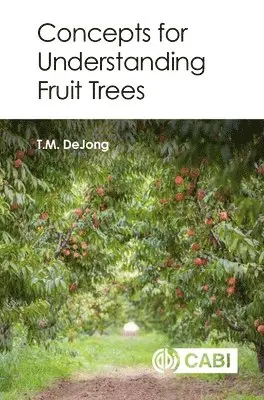
Anyone who observes fruit trees may wonder how or why they behave in specific ways. Some trees grow upright while others have a spreading habit. Some produce many flowers and small immature fruit only to drop most of the fruit later on; others grow more strongly on their sunny side than their shady side. It is common to ascribe such behavior to the tree as a whole and state that trees preferentially "allocate" resources to specific organs. However, this is the wrong approach to understanding tree functioning and behavior. Trees are not in control of what they do. What trees do and how they function is shaped by the individual organs that make up the tree, not by the tree as a whole. The genetic code only indirectly determines the habit, structure and behavior of a tree by defining the behavioral and functional limits of the component organs, tissues and cells. Unlike animals that have a mechanism for collective control of the whole organism - a central nervous system - trees (and plants in general) are more appropriately considered as collections of semi-autonomous organs. These organs are dependent on one another for resources, such as water, energy and nutrients, but control their own destiny. This book presents a clear set of integrative concepts for understanding the overall physiology and growth of temperate deciduous fruit trees. The emphasis is on overarching principles rather than detailed descriptions of tree physiology or differences among the numerous species of fruit trees. Although the focus is on deciduous fruit trees, many aspects apply to evergreen fruit trees and trees that grow naturally in unmanaged situations. Highly relevant for students and researchers in pomology, horticulture and plant sciences, the book is also suitable for practitioners, extension staff, and novice fruit tree growers.
- Varumärke
- Theodore DeJong
- EAN / GTIN
- 9781800620865
- ISBN
- 9781800620865
- Vikt
- 272 g
- Skick
- Ny