LÄS MER OM PRODUKTENProduktinformation
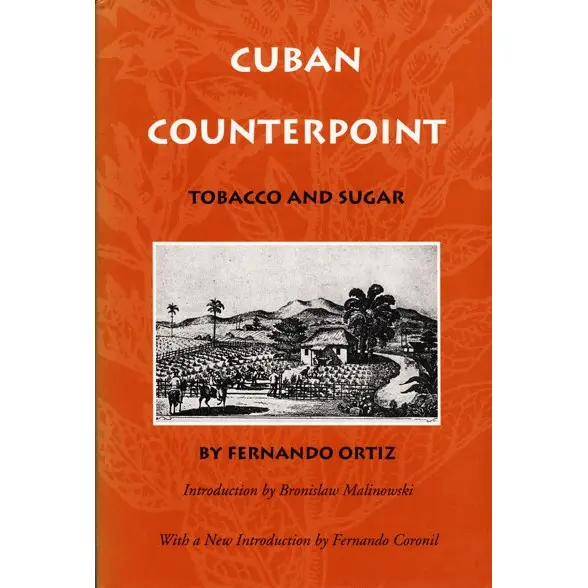
First published in 1940 and long out of print, Fernando Ortiz's classic work, Cuban Counterpoint is recognized as one of the most important books of Latin American and Caribbean intellectual history. Ortiz's examination of the impact of sugar and tobacco on Cuban society is unquestionably the cornerstone of Cuban studies and a key source for work on Caribbean culture generally. Though written over fifty years ago, Ortiz's study of the formation of a national culture in this region has significant implications for contemporary postcolonial studies.Ortiz presents his understanding of Cuban history in two complementary sections written in contrasting styles: a playful allegorical tale narrated as a counterpoint between tobacco and sugar and a historical analysis of their development as the central agricultural products of the Cuban economy. Treating tobacco and sugar both as agricultural commodities and as social characters in a historical process, he examines changes in their roles as the result of transculturation. His work shows how transculturation, a critical category Ortiz developed to grasp the complex transformation of cultures brought together in the crucible of colonial and imperial histories, can be used to illuminate not only the history of Cuba, but, more generally, that of America as well.This new edition includes an introductory essay by Fernando Coronil that provides a contrapuntal reading of the relationship between Ortiz's book and its original introduction by the renowned anthropologist Bronislaw Malinowski. Arguing for a distinction between theory production and canon formation, Coronil demonstrates the value of Ortiz's book for anthropology as well as Cuban, Caribbean, and Latin American studies, and shows Ortiz to be newly relevant to contemporary debates about modernity, postmodernism, and postcoloniality.