LÄS MER OM PRODUKTENProduktinformation
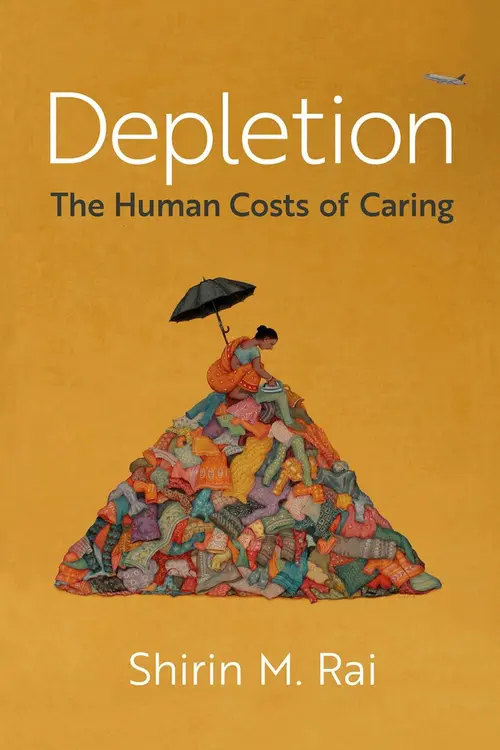
When thinking about the work of caring for others we often neglect the human cost born by those performing this care. Feminists have long talked about the ways in which unpaid work, particularly performed in the home, is habitually undervalued by society; but the work of caring for people, both paid and unpaid, can also take a toll on the health of individuals, households, and communities when we give more than we receive. This lopsided gap between outflows and inflows, as this book argues, is depletion.In Depletion, Shirin M. Rai examines the human costs of care work and how these are reproduced across the boundaries of class, race, gender, and generation. Depletion can be physical, as measured by the body mass index, exhaustion, sleeplessness, and vital health signs. It can also be mental, manifesting as self-doubt, guilt and apprehension, and the failure to take time for oneself, family, friends, and community. Moreover, depletion has effects that extend well beyond the individual, to households and communities. Including case studies from different parts of the world and building on various methodologies, Rai looks at the costs of care work, or what she calls "social reproduction" in several forms: biological reproduction, unpaid work in the home, and cultural and ideological work necessary to maintain social relations beyond the household. Various chapters examine the costs of commuting to work and for care, the value of unpaid work performed by women of different classes, the costs of household work performed by children, and the costs to communities when local economies are challenged by corporate interests. Lastly, Rai argues that depletion must be recognized in order for it to be reversed--the struggles to reverse depletion are struggles for a good life, generative of new imaginings of how care work, both draining and joyful, can be reorganized for a better future for all.