LÄS MER OM PRODUKTENProduktinformation
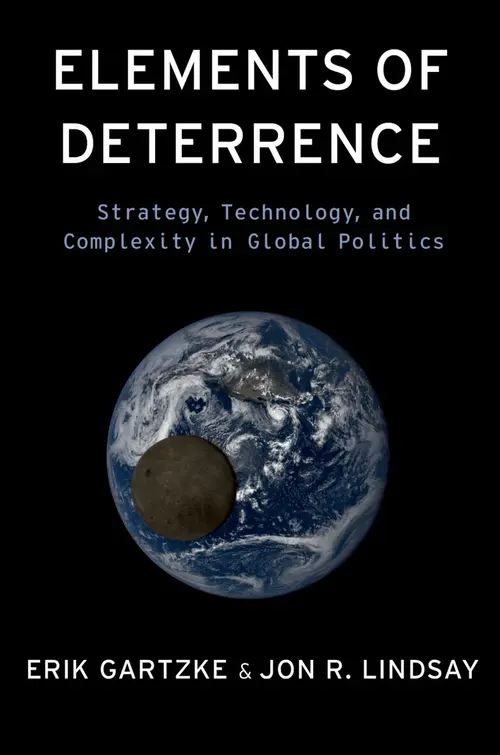
Global politics in the twenty-first century is complicated by dense economic interdependence, rapid technological innovation, and fierce security competition. How should governments formulate grand strategy in this complex environment? Many strategists look to deterrence as the answer, but how much can we expect of deterrence? Classical deterrence theory developed in response to the nuclear threats of the Cold War, but strategists since have applied it to a variety of threats in the land, sea, air, space, and cyber domains. If war is the continuation of politics by other means, then the diversity of technologies in modern war suggests a diversity of political effects. Some military forces or postures are most useful for "winning" various kinds of wars. Others are effective for "warning" adversaries of consequences or demonstrating resolve. Still others may accomplish these goals at lower political cost, or with greater strategic stability. Deterrence is not a simple strategy, therefore, but a complex relationship between many ends and many means. This book presents findings from a decade-long research program on "cross-domain deterrence." Through a series of theoretical and empirical studies, we explore fundamental trade-offs that have always been implicit in practice but have yet to be synthesized into a general theory of deterrence. Gartzke and Lindsay integrate newly revised and updated versions of published work alongside new work into a holistic framework for understanding how deterrence works--or fails to work--in multiple domains. Their findings show that in deterrence, all good things do not go together.