LÄS MER OM PRODUKTENProduktinformation
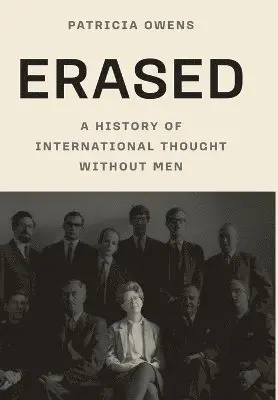
How a field built on the intellectual labor and expertise of women erased them The academic field of international relations presents its own history as largely a project of elite white men. And yet women played a prominent role in the creation of this new cross-disciplinary field. In Erased, Patricia Owens shows that, since its beginnings in the early twentieth century, international relations relied on the intellectual labour of women and their expertise on such subjects as empire and colonial administration, anticolonial organising, non-Western powers, and international organisations. Indeed, women were among the leading international thinkers of the era, shaping the development of the field as scholars, journalists, and public intellectuals-and as heterosexual spouses and intimate same-sex partners.Drawing on a wide range of archival sources, and weaving together personal, institutional, and intellectual narratives, Owens documents key moments and locations in the effort to forge international relations as a separate academic discipline in Britain. She finds that women's ideas and influence were first marginalised and later devalued, ignored, and erased. Examining the roles played by some of the most important women thinkers in the field, including Margery Perham, Merze Tate, Eileen Power, Margaret Cleeve, Coral Bell, and Susan Strange, Owens traces the intellectual and institutional legacies of misogyny and racism. She argues that the creation of international relations was a highly gendered and racialised project that failed to understand plurality on a worldwide scale. Acknowledging this intellectual failure, and recovering the history of women in the field, points to possible sources for its renewal.