LÄS MER OM PRODUKTENProduktinformation
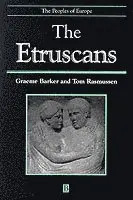
The Etruscans were the creators of one of the most highly developed cultures of the pre-Roman Mediterranean.For many centuries they flourished exuberantly in central Italy, only to be completely absorbed into the growing Roman state. Their power, at its height, extended well beyond their borders: they were known and feared by Romans and Greeks alike. Their arresting visual culture was second to none in the peninsula, embracing complex funerary and domestic architecture, tomb-painting, narrative art, and jewellery of great luxury and refinement. Their cities grew to notable size and sophistication.But they wrote no connected account of themselves that survives, and so this book focuses on three types of evidence for reconstructing Roman society: the extremely rich archaeological data, the accounts of Greek and Roman writers, and the inscriptions on Etruscan monuments.Until recently there has been little effort to relate the Etruscans to ancient Mediterranean society as a whole or to the physical landscape that sustained them. This book attempts both. Included are some of the more recent findings from landscape archaeology which help to explain in what kinds of settlement the Etruscans lived, how densely the land was peopled, and how the landscape was organized for agriculture.This approach is balanced by sections on material and visual culture, where the focus is on interpretation within the specific context and setting, and even here the landscape is never far from view. The landscape, ancient and modern, figures too in what is one of the book's unique features: a description of more than sixty sites and a listing of some thirty-five local museums in a format that is both analytical and practical.