LÄS MER OM PRODUKTENProduktinformation
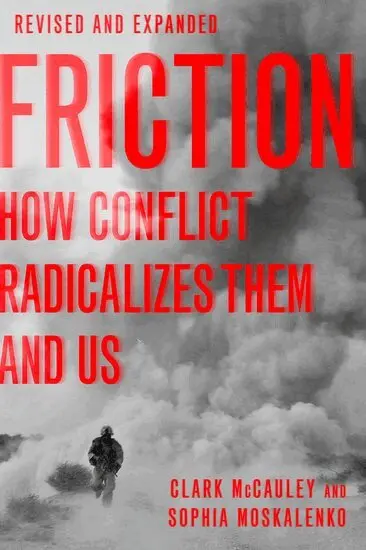
Terrorism is an extreme form of radicalization. In this ground-breaking and important book, Clark McCauley and Sophia Moskalenko identify and outline twelve mechanisms of political radicalization that can move individuals, groups, and the masses to increased sympathy and support for political violence.Co-authored by two psychologists both acknowledged in their field as experts in radicalization and consultants to the Department of Homeland Security and other government agencies, Friction draws on wide-ranging case histories to show striking parallels between 1800s anti-czarist terrorism, 1970s anti-war terrorism, and 21st century jihadist terrorism. Altogether, the twelve mechanisms of political radicalization demonstrate how unexceptional people are moved to exceptional violence in the conflict between states and non-state challengers.In this revised and expanded edition, McCauley and Moskalenko use the twelve mechanisms to analyze recent cases of lone-wolf terrorists and illustrate how individuals can become radicalized to jihadist violence with group influence or organizational support. Additionally, in the context of the Islamic State's worldwide efforts to radicalize moderate Muslims for jihad, they advance a model that differentiates radicalization in opinion from radicalization in action, and suggest different strategies for countering these diverse forms of radicalization. As a result, the authors conclude that the same mechanisms are at work in radicalizing both terrorists and states targeted by terrorists, implying that these conclusions are as relevant for policy-makers and security officers as they are for citizens facing the threat of terror today.