LÄS MER OM PRODUKTENProduktinformation
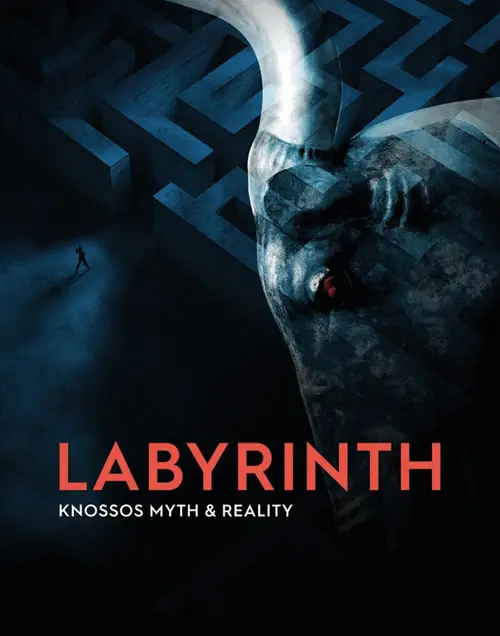
Crete was famous in Greek myth as the location of the labyrinth in which the Minotaur was confined in a palace at somewhere called 'Knossos'. From the Middle Ages travellers searched unsuccessfully for the Labyrinth. A handful of clues that survived, such as a coin with a labyrinth design and numerous small bronze age items. The name Knossos had survived - but it was nothing but a sprinkling of houses and farmland so they looked elsewhere. Finally, in 1878, a Cretan archaeologist, Minos Kalokairinos discovered evidence of a Bronze Age palace. British Archaeologist and then Keeper of the Ashmolean Arthur Evans came out to visit and was fascinated by the site. Between 1900 and 1931 Evans uncovered the remains of the huge palace which he felt must be the that of King Minos, and he adopted the name 'Minoans' for its occupants. He employed a team of archaeologists, architects and artists, and together they built up a picture of the Bronze Age community that had occupied the elaborate building. They imagined a sophisticated, nature-loving people, whose civilisation peaked, and then disintegrated. Evans's interpretations of his finds were accurate in some places, but deeply flawed in others. The Evans Archive, held by the Ashmolean, records his finds, theories and (often contentious) reconstructions.