LÄS MER OM PRODUKTENProduktinformation
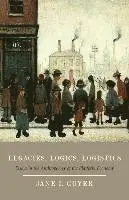
Legacies, Logics, Logistics brings together a set of essays, written both before and after the financial crisis of 2007-08, by eminent Africanist and economic anthropologist Jane I. Guyer. Each was written initially for a conference on a defined theme. When they are brought together and interpreted as a whole by Guyer, these varied essays show how an anthropological and socio-historical approach to economic practices-both in the West and elsewhere-can illuminate deep facets of economic life that the big theories and models may fail to capture.Focusing on economic actors-whether ordinary consumers or financial experts-Guyer traces how people and institutions hold together past experiences (legacies), imagined scenarios and models (logics), and situational challenges (logistics) in a way that makes the performance of economic life (on platforms made of these legacies, logics, and logistics) work in practice. Individual essays explore a number of topics-including time frames and the future, the use of percentages in observations and judgments, the explanation of prices, the coexistence of different world currencies, the reapplication of longtime economic theories in new settings, and, crucially, how we talk about the economy, how we use stable terms to describe a turbulent system. Valuable as standalone pieces, the essays build into a cogent method of economic anthropology.