LÄS MER OM PRODUKTENProduktinformation
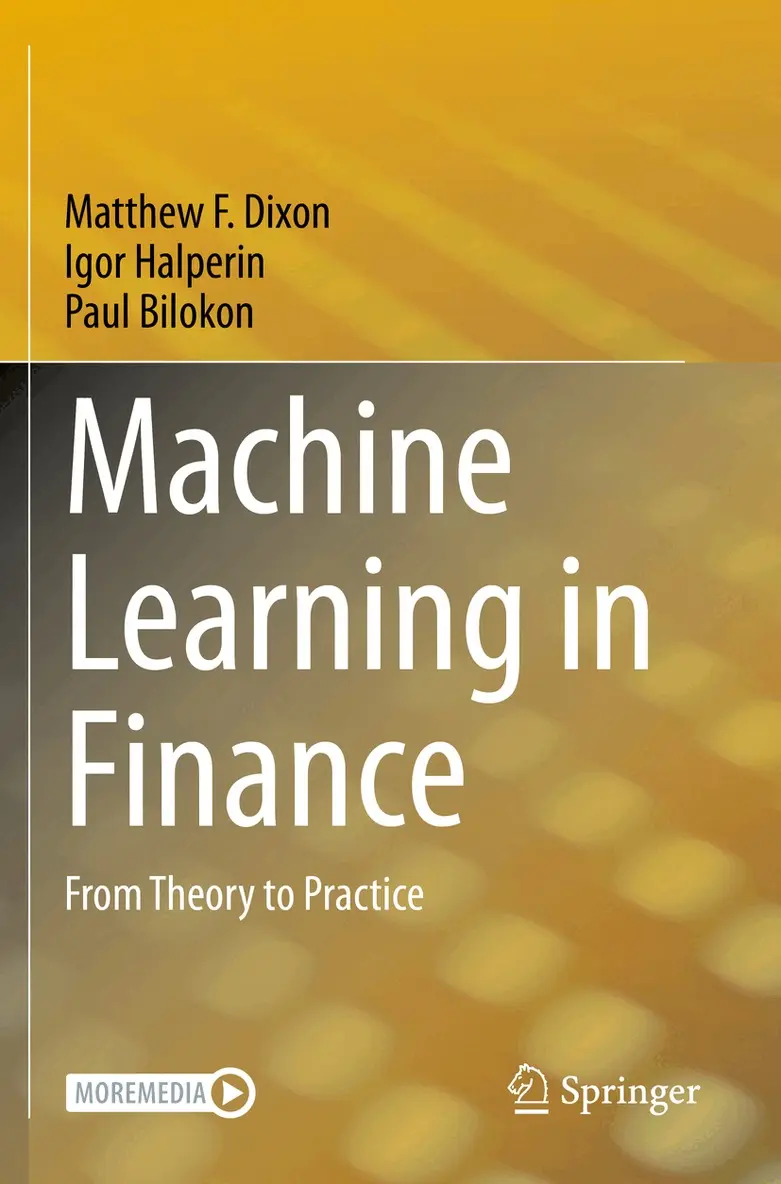
This book introduces machine learning methods in finance. It presents a unified treatment of machine learning and various statistical and computational disciplines in quantitative finance, such as financial econometrics and discrete time stochastic control, with an emphasis on how theory and hypothesis tests inform the choice of algorithm for financial data modeling and decision making. With the trend towards increasing computational resources and larger datasets, machine learning has grown into an important skillset for the finance industry. This book is written for advanced graduate students and academics in financial econometrics, mathematical finance and applied statistics, in addition to quants and data scientists in the field of quantitative finance.Machine Learning in Finance: From Theory to Practice is divided into three parts, each part covering theory and applications. The first presents supervised learning for cross-sectional data from both a Bayesianand frequentist perspective. The more advanced material places a firm emphasis on neural networks, including deep learning, as well as Gaussian processes, with examples in investment management and derivative modeling. The second part presents supervised learning for time series data, arguably the most common data type used in finance with examples in trading, stochastic volatility and fixed income modeling. Finally, the third part presents reinforcement learning and its applications in trading, investment and wealth management. Python code examples are provided to support the readers' understanding of the methodologies and applications. The book also includes more than 80 mathematical and programming exercises, with worked solutions available to instructors. As a bridge to research in this emergent field, the final chapter presents the frontiers of machine learning in finance from a researcher's perspective, highlighting how many well-known concepts in statistical physics are likelyto emerge as important methodologies for machine learning in finance.