LÄS MER OM PRODUKTENProduktinformation
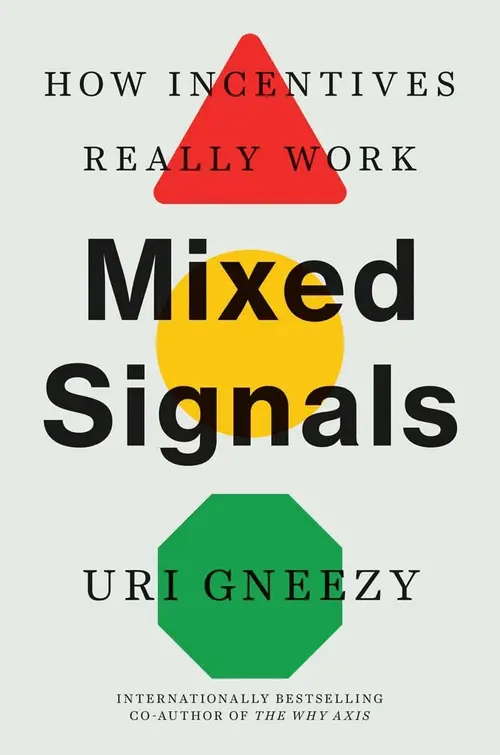
An informative and entertaining account of how actions send signals that shape behaviors and how to design better incentives for better results in our life, our work, and our world "Getting [an] incentives balance right can be complicated. But Gneezy hopes his book provides insights that help people feel prepared to take on the concept and design better incentives."-Financial Times "If you think you understand how incentives work, think again. A pioneering behavioral economist reveals how we can create reward systems that minimize unintended consequences and maximize happiness, health, wealth, and success."-Adam Grant, Granted (blog) Incentives send powerful signals that aim to influence behavior. But often there is a conflict between what we say and what we do in response to these incentives. The result: mixed signals. Consider the CEO who urges teamwork but designs incentives for individual success, who invites innovation but punishes failure, who emphasizes quality but pays for quantity. Employing real-world scenarios just like this to illustrate this everyday phenomenon, behavioral economist Uri Gneezy explains why incentives often fail and demonstrates how the right incentives can change behavior by aligning with signals for better results. Drawing on behavioral economics, game theory, psychology, and fieldwork, Gneezy outlines how to be incentive smart, designing rewards that are simple and effective. He highlights how the right combination of economic and psychological incentives can encourage people to drive more fuel-efficient cars, be more innovative at work, and even get to the gym. "Incentives send a signal," Gneezy writes, "and your objective is to make sure this signal is aligned with your goals."