LÄS MER OM PRODUKTENProduktinformation
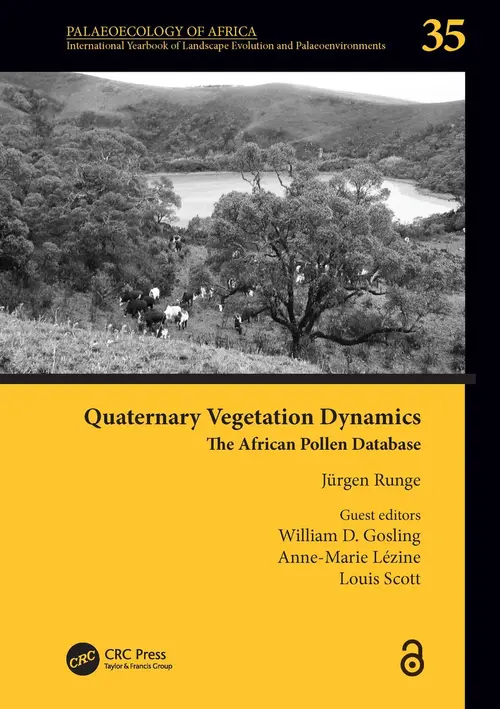
This book celebrates the relaunch of the African Pollen Database, presents state-of-the-art of modern and ancient pollen data from sub-Saharan Africa, and promotes Open Access science. Pollen grains are powerful tools for the study of past vegetation dynamics because they preserve well within sedimentary deposits and have a huge diversity in ornamentation that allows different taxa to be determined. The reconstruction of past vegetation from the examination of ancient pollen records thus can be used to characterize the nature of past landscapes (e.g. abundance of forests vs. grasslands), provide insights into changes in biodiversity, and gain empirical evidence of vegetation response to climatic change and human activity. In this, the 35th Volume of "Palaeoecology of Africa", we bring together new data and extensive synthetic reviews to provide novel insights into the relationships between human evolution, human activity, climate change and vegetation dynamics during the Quaternary, the last 2.6 million years. Current and ongoing climate and land-use change is exerting pressure on modern vegetation formations and threatening the livelihoods and wellbeing of many peoples in Africa. In this book the focus is on the Quaternary because it is during this geological period that the modern vegetation formations developed into their current configurations against a backdrop of high magnitude global climate change (glacial-interglacial cycles), human evolution, and a growing human land-use footprint. In this book the latest information is presented and collated from around the African continent to parameterize past vegetation states, identify the drivers of vegetation change, and assess the vegetation resilience to change. To achieve this research from two broad themes are covered: (i) the present is the key to the past (i.e. studies which improve our understanding of modern environments so that we can better interpret evidence from the past), and (ii) the past is the key to the future (i.e. studies which unlock information on how and why vegetation changed in the past so one can better anticipate trajectories of future change). This Open Access book will provide a strong foundation for future research exploring past ecological, environmental and climatic change within Africa and the surrounding islands. The book is organized regionally (covering western, eastern, central, and southern Africa) and it contains specialized articles focused on particular topics (such as modern pollen-vegetation relationships and fire as a driver of vegetation change), as well as regional and pan-African syntheses drawing together decades of research to assess key scientific questions (including the role of climate in driving vegetation change and the role of vegetation change in human evolution). These articles will be useful to students and teachers from high school to the highest level of university who are interested in the origins and dynamics of vege