LÄS MER OM PRODUKTENProduktinformation
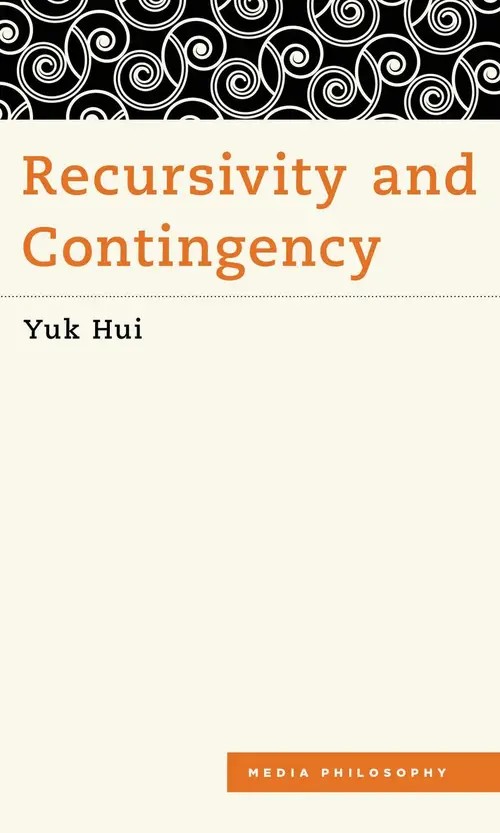
This book employs recursivity and contingency as two principle concepts to investigate into the relation between nature and technology, machine and organism, system and freedom. It reconstructs a trajectory of thought from an Organic condition of thinking elaborated by Kant, passing by the philosophy of nature (Schelling and Hegel), to the 20th century Organicism (Bertalanffy, Needham, Whitehead, Wiener among others) and Organology (Bergson, Canguilhem, Simodnon, Stiegler), and questions the new condition of philosophizing in the time of algorithmic contingency, ecological and algorithmic catastrophes, which Heidegger calls the end of philosophy.The book centres on the following speculative question: if in the philosophical tradition, the concept of contingency is always related to the laws of nature, then in what way can we understand contingency in related to technical systems? The book situates the concept of recursivity as a break from the Cartesian mechanism and the drive of system construction; it elaborates on the necessity of contingency in such epistemological rupture where nature ends and system emerges. In this development, we see how German idealism is precursor to cybernetics, and the Anthropocene and Noosphere (Teilhard de Chardin) point toward the realization of a gigantic cybernetic system, which lead us back to the question of freedom. It questions the concept of absolute contingency (Meillassoux) and proposes a cosmotechnical pluralism. Engaging with modern and contemporary European philosophy as well as Chinese thought through the mediation of Needham, this book refers to cybernetics, mathematics, artificial intelligence and inhumanism.