LÄS MER OM PRODUKTENProduktinformation
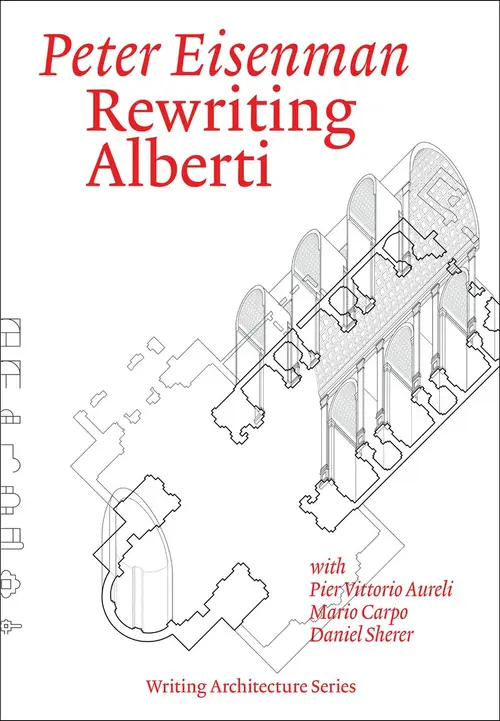
A fresh, groundbreaking analysis of renowned Renaissance architect Leon Battista Alberti's five built works, suggesting a new relationship of form to meaning.Much has been written about Renaissance architect Leon Battista Alberti's mantra of part-to-whole as one of the continuing conditions of architecture. While this underlying thesis has often been repeated in the annals of architectural history and theory, architects have rarely questioned the idea. In Rewriting Alberti, architect Peter Eisenman suggests, however, that Alberti provoked a radical discourse beyond the part-to-whole dialogue featured in his Ten Books of Architecture. Eisenman's in-depth analysis of Alberti's five built works reveals a disjunction between the architect's buildings and theoretical writings, suggesting a new relationship of form to meaning based on the fragmentation of homogeneous space.Rewriting Alberti includes contributions by Pier Vittorio Aureli, Mario Carpo, and Daniel Sherer. Carpo, an architectural historian and critic, theorizes that Alberti's work initiated an idea of the discipline as a notational system akin to contemporary computational logics. By way of comparison, Sherer, an architectural historian, reconsiders critic Manfredo Tafuri's readings of Alberti, and architect and theorist Aureli draws on Alberti to propose another idea of the architectural "project."Here, in one book are four different discourses (and more than 60 drawings) that look back at the origins of architectural signs and semiology and forward to understand the way that history informs architecture today.