LÄS MER OM PRODUKTENProduktinformation
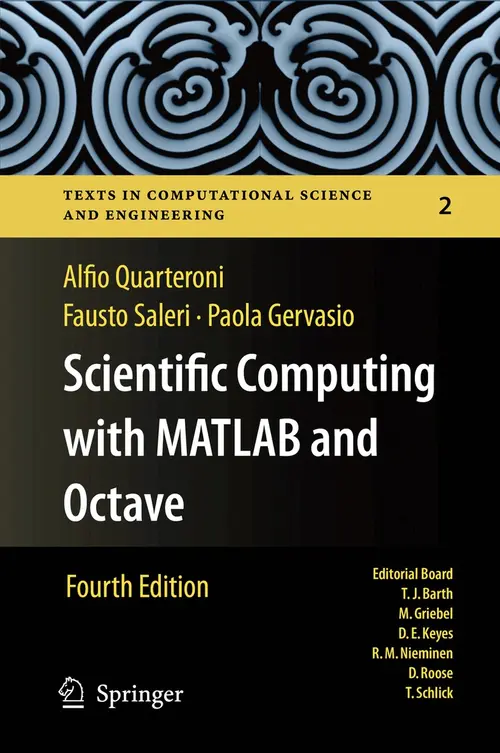
This textbook is an introduction to Scientific Computing, in which several numerical methods for the computer-based solution of certain classes of mathematical problems are illustrated. The authors show how to compute the zeros, the extrema, and the integrals of continuous functions, solve linear systems, approximate functions using polynomials and construct accurate approximations for the solution of ordinary and partial differential equations. To make the format concrete and appealing, the programming environments Matlab and Octave are adopted as faithful companions. The book contains the solutions to several problems posed in exercises and examples, often originating from important applications. At the end of each chapter, a specific section is devoted to subjects which were not addressed in the book and contains bibliographical references for a more comprehensive treatment of the material.From the review:".... This carefully written textbook, the third English edition, contains substantial new developments on the numerical solution of differential equations. It is typeset in a two-color design and is written in a style suited for readers who have mathematics, natural sciences, computer sciences or economics as a background and who are interested in a well-organized introduction to the subject." Roberto Plato (Siegen), Zentralblatt MATH 1205.65002.