LÄS MER OM PRODUKTENProduktinformation
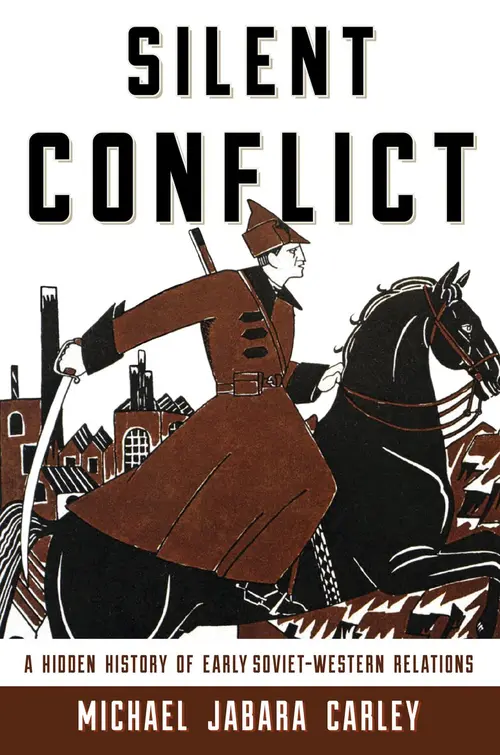
This deeply informed book traces the dramatic history of early Soviet-western relations after World War I. Michael Jabara Carley provides a lively exploration of the formative years of Soviet foreign policy making after the Bolshevik Revolution, especially focusing on Soviet relations with the West during the 1920s. Carley demonstrates beyond doubt that this seminal period-termed the "silent conflict" by one Soviet diplomat-launched the Cold War. He shows that Soviet-western relations, at best grudging and mistrustful, were almost always hostile. Concentrating on the major western powers-Germany, France, Great Britain, and the United States-the author also examines the ongoing political upheaval in China that began with the May Fourth Movement in 1919 as a critical influence on western-Soviet relations. Carley draws on twenty-five years of research in recently declassified Soviet and western archives to present an authoritative history of the foreign policy of the Soviet state. From the earliest days of the Bolshevik Revolution, deeply anti-communist western powers attempted to overthrow the newly formed Soviet government. As the weaker party, Soviet Russia waged war when it had to, but it preferred negotiations and agreements with the West rather than armed confrontation. Equally embattled by internal struggles for power after the death of V. I. Lenin, the Soviet government was torn between its revolutionary ideals and the pragmatic need to come to terms with its capitalist adversaries. The West too had its ideologues and pragmatists. This illuminating window into the overt and covert struggle and ultimate standoff between the USSR and the West during the 1920s will be invaluable for all readers interested in the formative years of the Cold War.