LÄS MER OM PRODUKTENProduktinformation
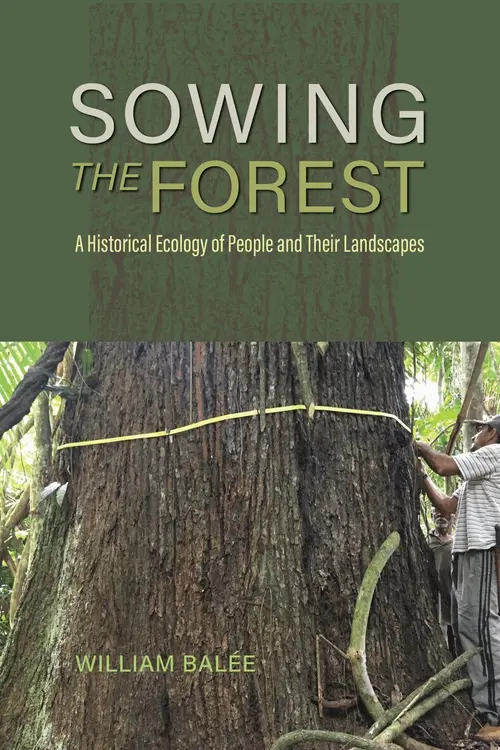
Explores how, over centuries, Amazonian people and their cultures have interacted with rainforestsWilliam BalÉe is a world-renowned expert on the cultural and historical ecology of the Amazon basin. His new collection, Sowing the Forest, is a companion volume to the award-winning Cultural Forests of the Amazon, published in 2013. Sowing the Forest engages in depth with how, over centuries, Amazonian people and their cultures have interacted with rainforests, making the landscapes of palm forests and other kinds of forests, and how these and related forests have fed back into the vocabulary and behavior of current indigenous occupants of the remotest parts of the vast hinterlands.The book is divided into two parts. Part 1, "Substrate of Intentionality," comprises chapters on historical ecology, indigenous palm forests, plant names in Amazonia, the origins of the Amazonian plantain, and the unknown "Dark Earth people" of thousands of years ago and their landscaping. Together these chapters illustrate the phenomenon of feedback between culture and environment.In part 2, "Scope of Transformation," BalÉe lays out his theory of landscape transformation, which he divides into two rubrics-primary landscape transformation and secondary landscape transformation-and for which he provides examples and various specific effects. One chapter compares environmental and social interrelationships in an Orang Asli group in Malaysia and the Ka'apor people of eastern Amazonian Brazil, and another chapter covers loss of language and culture in the Bolivian Amazon. A final chapter addresses the controversial topic of monumentality in the rainforest. BalÉe concludes by emphasizing the common thread in Amazonian historical ecology: the long-term phenomenon of encouraging diversity for its own sake, not just for economic reasons.