LÄS MER OM PRODUKTENProduktinformation
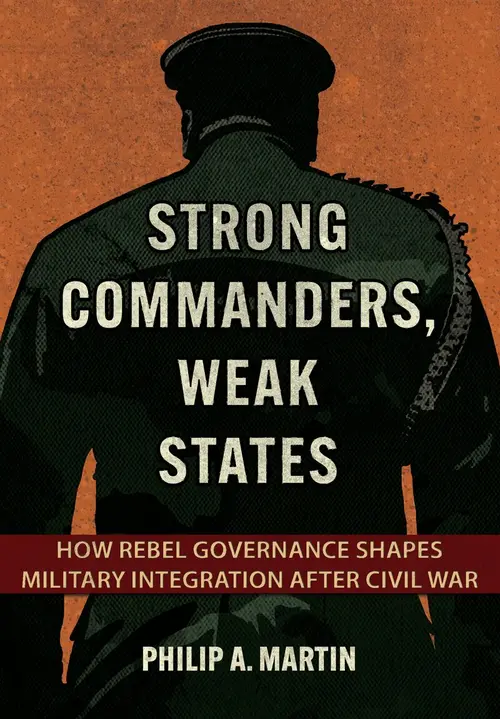
In Strong Commanders, Weak States, Philip A. Martin investigates a fundamental political challenge faced by post-conflict states: how to create obedient national militaries from the remnants of insurgent forces. When civil wars end, non-state armed groups often integrate into post-conflict militaries. Yet rebel-military integration does not always happen smoothly. In some cases, former rebels cooperate with new leaders, forming powerful national armies that underpin postwar stability. In others, they resist the authority of new leaders, maintaining clandestine armed networks that disrupt centralized state-building. Martin argues that how field commanders of non-state armed groups governed during the war explains this variation. Rebel commanders who build accountable governance systems gain strong social support from rebel-ruled communities, becoming locally embedded. Thanks to these community ties, which persist after the war, these embedded commanders have the leverage to push the central government for concessions, resist directives to disarm fighters, or even orchestrate coup d'états. Conversely, rebel commanders who governed coercively are less likely to sustain community ties. Without the ability to mobilize collective action after the war, these non-embedded commanders have stronger incentives to cooperate with new regime leaders. Wielding in-depth evidence from Côte d'Ivoire and cases of rebel-military integration elsewhere, Martin shows that good governance during wartime can-ironically-lead to poor postwar state consolidation. Rather than preparing insurgents to be successful state builders, effective rebel governance can hinder post-conflict state-building. As costly peace operations come under increasing scrutiny, Strong Commanders, Weak States offers fresh guidance on how transitions to peace can better succeed.