LÄS MER OM PRODUKTENProduktinformation
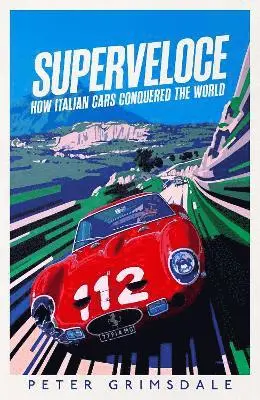
***Winner of the Motorsports Book of the Year at the Charles Tyrwhitt Sports Book Awards 2026*****Shortlisted for the William Hill Sports Book of the Year 2025**Silverstone, 1950 - the first post-war Grand Prix and the birth of Formula One. The king and queen, alongside 150,000 spectators, watch in dismay as Italy's Alfa Romeos scream past to claim the first three places. British cars are hopelessly outclassed by Alfa Romeos and Maseratis. How can it be, they all wonder, that Italy, its industry reduced to rubble by Allied bombs so recently, has set new standards of speed and style that leave the rest of the world for dust? Italy's ability to outflank its more powerful and better-equipped neighbours is nothing new. At the turn of the century Italy made so few cars that its output wasn't recorded, by 1907 Italian cars and drivers swept the board in the first Grand Prix season. In Superveloce, Peter Grimsdale explores the mystery of how a country with no industrial revolution, hampered by poverty, came to represent an innovation and flair that other countries struggled to match. Grimsdale traces a century of Italian design genius, the rise of great marques such as Ferrari, Fiat and Alfa Romeo. We see the lives of fiercely charismatic and competitive drives like Ascari, Varzi and Nuvolari. Does the secret lie deep in Italy's cultural heritage - in historic links between art and machine going back to da Vinci? Or is it simply 'sprezzatura' - the art of making something difficult look effortlessly easy?