LÄS MER OM PRODUKTENProduktinformation
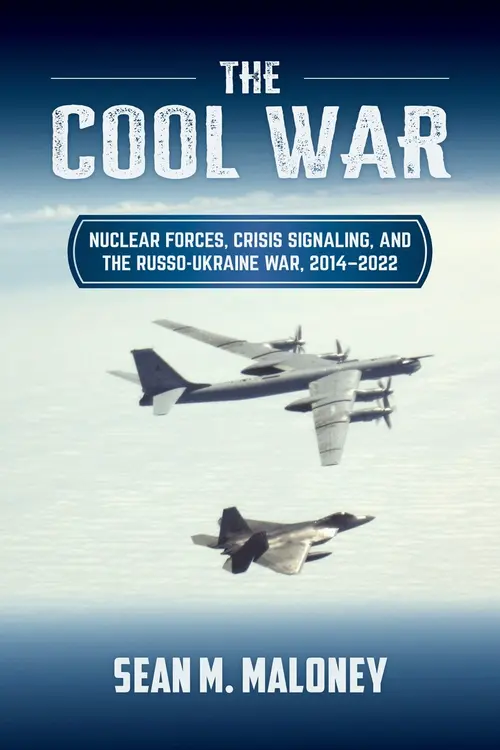
Sean Maloney reveals how Vladimir Putin has aggressively leveraged nuclear signaling to manipulate NATO and deter Western intervention in Ukraine. With Cold War-level brinkmanship and modern information warfare, Russia's tactics have reshaped the strategic landscape-and raised urgent questions about how long the West can hold the line.Nuclear signaling is defined as the deliberate maneuvering of nuclear forces to deter and influence an adversary's actions. Author Sean Maloney shows how Russian leader Vladimir Putin has systematically employed nuclear signaling to force desired behavior from both NATO and the United States. This strategy has escalated greatly during the Russo-Ukraine War as Putin seeks to deter Western intervention and support of Ukraine. Putin uses many forms of nuclear signaling, including ordering jets capable of carrying nuclear weapons to fly in western European airspace, staging a joint bomber exercise with China near Alaska, and instructing submarines carrying nuclear weapons to surface through the Arctic icepack. The frequency of this signaling far exceeds that of similar activity during the Cold War and has escalated to more dangerous levels than before. When Russia experienced setbacks on the battlefield, Putin often intensified his nuclear-force posturing by paring it with thinly veiled threats to use tactical nuclear weapons. Maloney argues convincingly that in the post-Cold War era, Putin has skillfully combined his use of nuclear signaling with advances in information technology to more effectively manipulate Western nations. He asserts that the United States was initially late in recognizing this development, but as the situation worsened, America and NATO have devised a series of responses that now hold Russia in check. The question is, for how long? Maloney concludes that Putin's nuclear posturing has produced mixed results. First and foremost, Putin did successfully deter the United States and other NATO countries from outright military action in defense of Ukraine following the 2022 invasion. However, Russia's nuclear signaling did not prevent the West from providing weapons and intelligence to Ukraine, nor did it stop NATO's expansion. Nevertheless, the partial success of Russia's Cool War activity does not lessen the significance of this new reality or the scope of the problems that face the West moving forward.