LÄS MER OM PRODUKTENProduktinformation
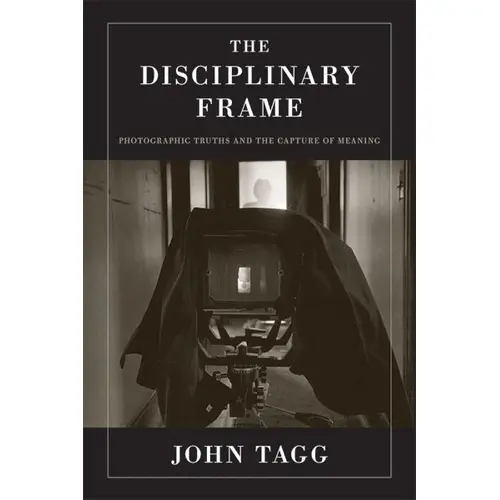
Photography can seem to capture reality and the eye like no other medium, commanding belief and wielding the power of proof. In some cases, a photograph itself is attributed the force of the real. How can a piece of chemically discolored paper have such potency? How does the meaning of a photograph become fixed? In The Disciplinary Frame, John Tagg claims that, to answer these questions, we must look at the ways in which all that frames photography-the discourse that surrounds it and the institutions that circulate it- determines what counts as truth.The meaning and power of photographs, Tagg asserts, are discursive effects of the regimens that produce them as official record, documentary image, historical evidence, or art. Teasing out the historical processes involved, he examines a series of revealing case studies from nineteenth-century European and American photographs to Depression-era works by Walker Evans, Dorothea Lange, and Margaret Bourke-White to the conceptualist photography of John Baldessari.Central to this transformative work are questions of cultural strategy, the growth of the state, and broad issues of power and representation: how the discipline of the frame holds both photographic image and viewer in place, without erasing the possibility for evading, and even resisting, capture. Photographs, Tagg ultimately finds, are at once too big and too small for the frames in which they are enclosed-always saying more than is wanted and less than is desired.