LÄS MER OM PRODUKTENProduktinformation
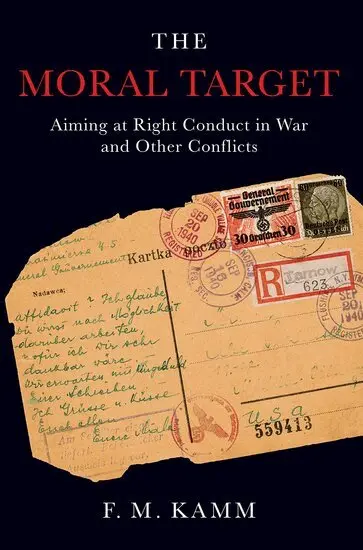
The Moral Target: Aiming at Right Conduct in War and Other Conflicts comprises essays that discuss aspects of war and other conflicts in the light of both nonconsequentialist ethical theory and the views of such theorists as Barbara Herman, Jeff McMahan, Avishai Margalit, and Michael Walzer. The first essay deals with the relation between states of affairs whose termination justifies war and states of affairs that once achieved should put an end to war. The next few essays deal with conduct in war. They first consider the implications of general moral principles (including the Doctrine of Double Effect and Principle of Permissible Harm) for the permissibility of harm to combatants and noncombatants, and then whether factors unique to war should alter what is permissible. In particular, if the context of war should affect the relative violability of different combatants and different noncombatants, if terror killing combatants and/or noncombatants should ever be permissible, and if there is liability to harm in virtue of belonging to a group. The fifth essay examines how recent discussions by nonconsequentialists about redirection of threats (as in the famous Trolley Problem) may illuminate the moral status of collaboration that took place with Nazis during the Holocaust. What justice requires after conflict and how our ability to provide it affects the permissibility of starting war, is the next topic. Truth and reconciliation commissions and retribution post-conflict are discussed, and whether harm to civilians stemming from such procedures (and how the harm arises) bear on the permissibility of instituting the procedures. The three concluding essays deal with moral aspects of conflicts outside of standard war, including those involving the threat of terrorism, resistance to communal injustice (for example, in the case of the Taliban women), and the use of nuclear weapons for deterrence.
- EAN / GTIN
- 9780190490638
- Varumärke
- F.M. Kamm
- Skick
- Ny