LÄS MER OM PRODUKTENProduktinformation
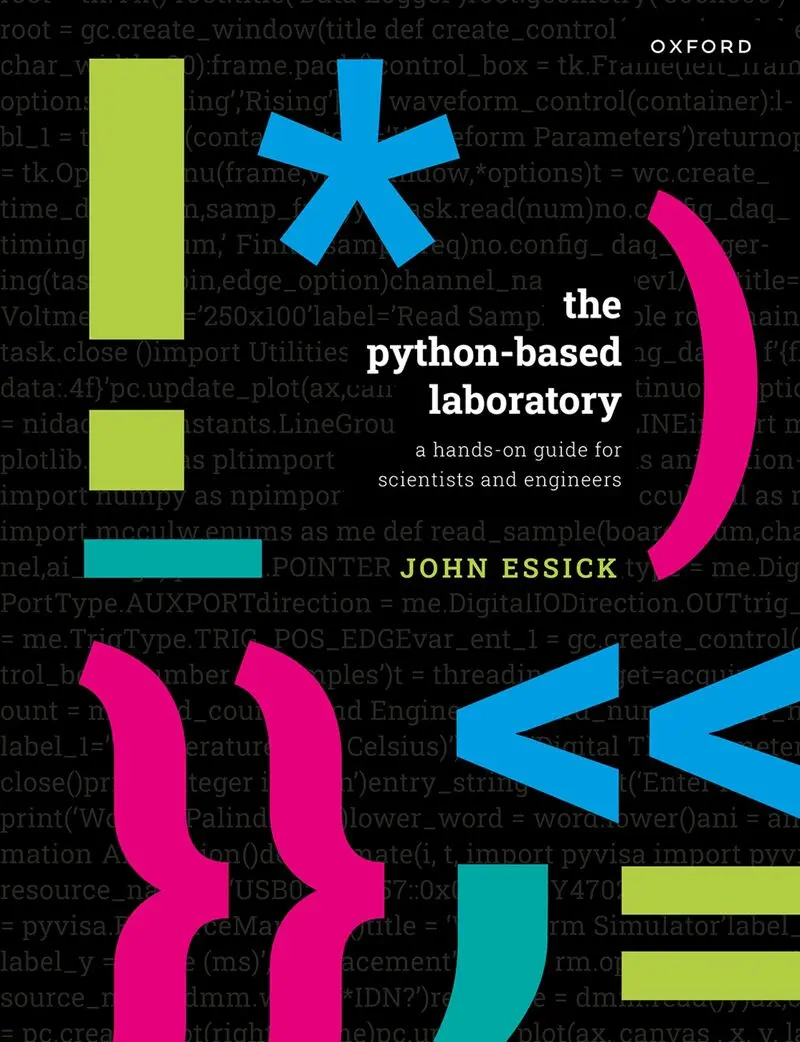
The Python-Based Laboratory: A Hands-On Guide for Scientists and Engineers provides a learn-by-doing approach to acquiring the Python programming skills needed to implement computer-controlled experimental work. The book leads its readers to mastery of the popular, open-source Python computer language in its role as a powerful laboratory tool by carrying out interesting and relevant projects that explore the acquisition, production, analysis, and presentation of digitized waveforms. Readers, who are assumed to have no prior computer programming or Python background, begin writing meaningful programs in the first few pages.The Python-Based Laboratory can be used as a textbook for science and engineering instructional laboratory students who are being taught up-to-date Python-based experimental skills. The book also works well as a self-study guide for professional laboratory researchers, industrial engineers, hobbyists, and electronics enthusiasts seeking to automate tasks using Python. Topics covered include the control of data acquisition devices (including multifunction data acquisition hardware and IEEE-interfaced stand-alone instruments), data file storage and presentation, digitized data concepts (such as resolution, sampling frequency, and aliasing), and data analysis techniques (curve fitting and fast Fourier transform). As readers work their way through the book, they build several computer-based instruments, including a DC voltmeter, digital oscilloscope, DC voltage source, waveform generator, blinking LED array, digital thermometer, and spectrum analyzer. Each chapter concludes with a Do-It-Yourself project and a Use It! example as well as a healthy selection of homework-style problems, allowing readers to test their understanding and further develop their Python-based experimentation skills.