LÄS MER OM PRODUKTENProduktinformation
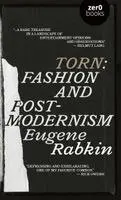
Since the beginning of the twenty-first century, fashion has undergone a paradoxical shift: it has grown creatively impoverished despite becoming more culturally relevant. Increasingly, the industry s output feels listless, unexciting, like a pastiche of past styles, not genuine innovation. What caused this? How did fashion design get reduced to logoed merch? Why does spectacle outweigh reality? How did business priorities come to eclipse creativity? Eugene Rabkin founder of StyleZeitgeist magazine and noted fashion journalist, lecturer, and critic whose work has appeared in The New York Times, The Financial Times, and The Business of Fashion offers an unflinching answer. Torn: Fashion and Postmodernism examines how the postmodern turn, with its dismantling of hierarchies and embracing of commerciality, its democratization of taste and reliance on irony and poptimism, has undermined fashion. Across ten incisive chapters, these pages trace the industry s journey from an era that produced Alexander McQueen s theatrical genius, Helmut Lang s modernism, and Martin Margiela s conceptual rigor to an era dominated by corporations and celebrities. Along the way, Rabkin shows how the image is decoupled from its substance, how commerce has overridden editorial authority, and how fashion s relationship with the arts has shifted from symbiotic to parasitic.