LÄS MER OM PRODUKTENProduktinformation
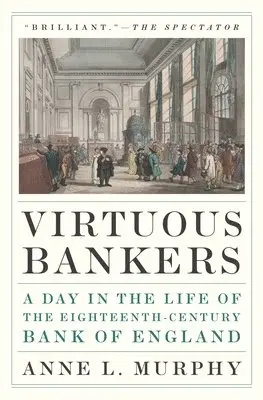
An intimate account of the eighteenth-century Bank of England that shows how a private institution became "a great engine of state"The eighteenth-century Bank of England was an institution that operated for the benefit of its shareholders-and yet came to be considered, as Adam Smith described it, "a great engine of state." In Virtuous Bankers, Anne Murphy explores how this private organization became the guardian of the public credit upon which Britain's economic and geopolitical power was based. Drawing on the voluminous and detailed minute books of a Committee of Inspection that examined the Bank's workings in 1783-84, Murphy frames her account as "a day in the life" of the Bank of England, looking at a day's worth of banking activities that ranged from the issuing of bank notes to the management of public funds.Murphy discusses the bank as a domestic environment, a working environment, and a space to be protected against theft, fire, and revolt. She offers new insights into the skills of the Bank's clerks and the ways in which their work was organized, and she positions the Bank as part of the physical and cultural landscape of the City: an aggressive property developer, a vulnerable institution seeking to secure its buildings, and an enterprise necessarily accessible to the public. She considers the aesthetics of its headquarters-one of London's finest buildings-and the messages of creditworthiness embedded in that architecture and in the very visible actions of the Bank's clerks. Murphy's uniquely intimate account shows how the eighteenth-century Bank was able to deliver a set of services that were essential to the state and commanded the confidence of the public.