LÄS MER OM PRODUKTENProduktinformation
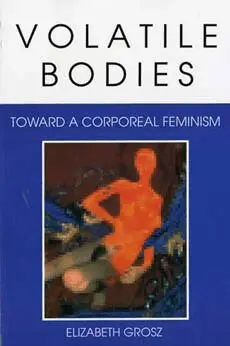
"The location of the author's investigations, the body itself rather than the sphere of subjective representations of self and of function in cultures, is wholly new. . . . I believe this work will be a landmark in future feminist thinking." -Alphonso Lingis"This is a text of rare erudition and intellectual force. It will not only introduce feminists to an enriching set of theoretical perspectives but sets a high critical standard for feminist dialogues on the status of the body." -Judith Butler Volatile Bodies demonstrates that the sexually specific body is socially constructed: biology or nature is not opposed to or in conflict with culture. Human biology is inherently social and has no pure or natural "origin" outside of culture. Being the raw material of social and cultural organization, it is "incomplete" and thus subject to the endless rewriting and social inscription that constitute all sign systems.Examining the theories of Freud, Lacan, Merleau-Ponty, Foucault, Deleuze, Derrida, etc. on the subject of the body, Elizabeth Grosz concludes that the body they theorize is male. These thinkers are not providing an account of "human" corporeality but of male corporeality. Grosz then turns to corporeal experiences unique to women-menstruation, pregnancy, childbirth, lactation, menopause. Her examination of female experience lays the groundwork for developing theories of sexed corporeality rather than merely rectifying flawed models of male theorists.