LÄS MER OM PRODUKTENProduktinformation
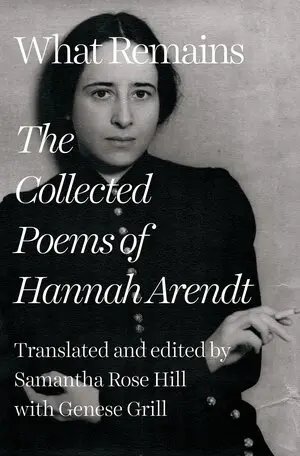
Internationally renowned as one of the twentieth century's foremost public intellectuals, Hannah Arendt was also intensely private. Though she often acknowledged that the language of poetry-especially that of Dickinson, Goethe and Lowell-informed her work, only a few people knew that Arendt herself wrote poems.In fact, between 1923 and 1961, Arendt wrote seventy-four poems, many of them signposts in an otherwise unwritten autobiography. For nearly forty years after her death, these poems remained hidden among the archives of the Library of Congress, until 2011, when they were rediscovered by scholar and translator Samantha Rose Hill. Now, for the first time in English, Hill and Genese Grill present Arendt's poems in chronological order, taking us from the zenith of the Weimar Republic to the Cold War, and from Marburg, Germany, to New York's Upper West Side.Throughout, Arendt uses poetry to mark moments of joy, love, loss and reflection. In "W. B.," written in 1942, she remembers Walter Benjamin, who died near the French-Spanish border while attempting to flee the Nazis: "Gentle whispering melodies / Sound from the darkness. / We listen so we can let go." So, too, she reflects on mutability and transience in 1946: "I know that the houses have fallen. / We entered the world in them, wonderfully sure, that they / were more durable than ourselves." She tries to understand her place in the world: "Ironically foolish, / I've forgotten nothing, / I know the emptiness, / I know the burden, / I dance, I dance / In ironic splendor." A gift to all readers of Arendt, this stunning, dual-language edition provides an unparalleled view into the inner sanctum of one of our most original thinkers.