LÄS MER OM PRODUKTENProduktinformation
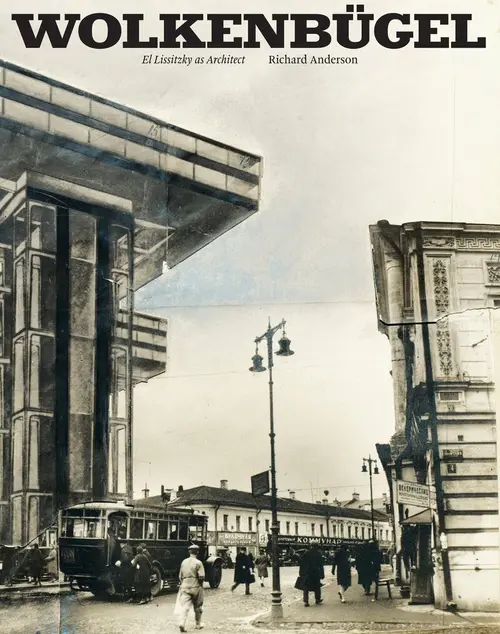
How a visionary, never-realized architectural project, devised by one of the twentieth century's greatest artists, shaped architectural culture in Europe between the world wars.After achieving international acclaim as a painter and designer, El Lissitzky set out in 1924 to convince the world-and himself-that he was also an architect. He did this with a project for a "horizontal skyscraper," which he gave an obscure and untranslatable name: Wolkenbügel. Eight of these buildings, perched atop slender pillars, were intended to stand at major intersections along Moscow's Boulevard Ring, integrating the flow of tramlines, subways, and elevators. In Wolkenbügel, Richard Anderson explores Lissitzky's translation of visual and textual media into spatial ideas and offers an in-depth study of the surviving drawings and archival artifacts related to Lissitzky's most complex architectural proposal.This book offers a new and definitive account of how Lissitzky expanded the conceptual and representational tools available to the modern architect by drawing on many sources-including photography, typography, exhibition design, and even the elementary forms of the alphabet-to create the Wolkenbügel. Anderson shows how the production and reception of a paper project served to link key ideas and relationships that animated the worlds of art and architecture, offering a new view on received histories of the interwar avant-gardes. By attending to Lissitzky's singular architectural project, Anderson reveals the dynamics of internationality in the constitution of modern architectural culture in Europe.