LÄS MER OM PRODUKTENProduktinformation
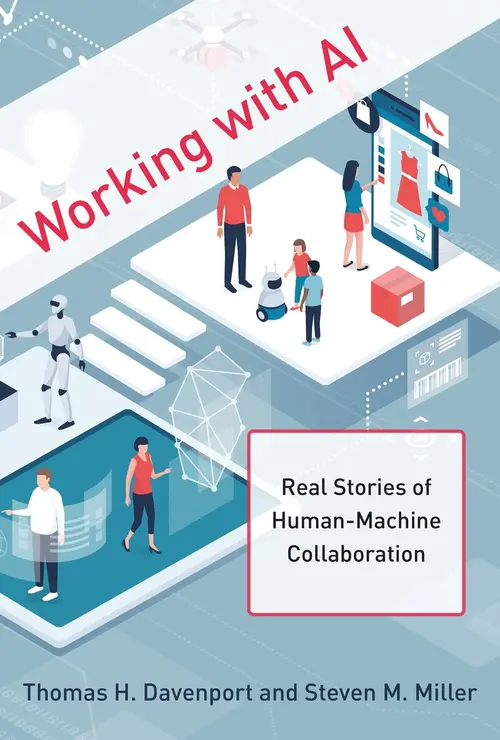
Two management and technology experts show that AI is not a job destroyer, exploring worker-AI collaboration in real-world work settings.This book breaks through both the hype and the doom-and-gloom surrounding automation and the deployment of artificial intelligence-enabled-"smart"-systems at work. Management and technology experts Thomas Davenport and Steven Miller show that, contrary to widespread predictions, prescriptions, and denunciations, AI is not primarily a job destroyer. Rather, AI changes the way we work-by taking over some tasks but not entire jobs, freeing people to do other, more important and more challenging work. By offering detailed, real-world case studies of AI-augmented jobs in settings that range from finance to the factory floor, Davenport and Miller also show that AI in the workplace is not the stuff of futuristic speculation. It is happening now to many companies and workers. These cases include a digital system for life insurance underwriting that analyzes applications and third-party data in real time, allowing human underwriters to focus on more complex cases; an intelligent telemedicine platform with a chat-based interface; a machine learning-system that identifies impending train maintenance issues by analyzing diesel fuel samples; and Flippy, a robotic assistant for fast food preparation. For each one, Davenport and Miller describe in detail the work context for the system, interviewing job incumbents, managers, and technology vendors. Short "insight" chapters draw out common themes and consider the implications of human collaboration with smart systems.