LÄS MER OM PRODUKTENProduktinformation
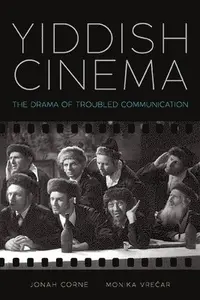
Offers a bold new reading of Yiddish cinema by exploring the early diasporic cinema's fascination with media and communication.In this book, Jonah Corne and Monika Vrečar offer a conceptually innovative reexamination of Yiddish cinema, a crucial yet little-known diasporic phenomenon that enjoyed its "golden age" in the mid- to late 1930s. Yiddish cinema, they argue, exhibits a distinctive fascination with media forms, technologies, and institutions, and with relationality writ large. What stands behind this communication obsession, as it might be understood, is the films' engagement both with Judaic ideals and with a series of Jewish sociohistorical predicaments of troubled communication (immigration, displacement, the breakdown of tradition, and so on) that the films seek to reflect. Accordingly, the authors create a resonant conversation between Yiddish cinema, populated by an endless procession of disconnected characters ardently striving to rejoin the world of communication, and the brilliant yet underappreciated ideas of pioneering Czech-Jewish media theorist Vilém Flusser (1920-1991), who escaped Nazi persecution and built the first part of his intellectual career in Brazil. Indeed, the authors claim that the popular art of Yiddish cinema articulates in dramatic terms a version of the central Flusserian hypothesis that "the structure of communication is the infrastructure of human reality" and, by doing so, embodies a remarkable Jewish media theory "from below." Films discussed include The Wandering Jew (1933), The Dybbuk (1937), Where is My Child? (1937), A Little Letter to Mother (1938), Kol Nidre (1939), Motel the Operator (1939), Tevye (1939), The Living Orphan (1939), and Long Is the Road (1948).