LÄS MER OM PRODUKTENProduktinformation
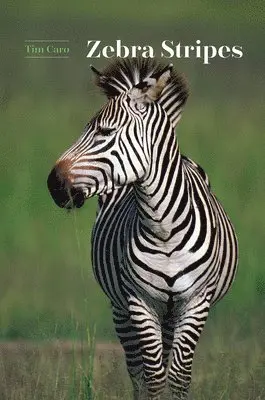
From eminent biologists like Alfred Russel Wallace and Charles Darwin to famous authors such as Rudyard Kipling in his Just So Stories, many people have asked, "Why do zebras have stripes?" There are many explanations, but until now hardly any have been seriously addressed or even tested. In Zebra Stripes, Tim Caro takes readers through a decade of painstaking fieldwork examining the significance of black-and-white striping and, after systematically dismissing every hypothesis for these markings with new data, he arrives at a surprising conclusion: zebra's markings are nature's defense against biting fly annoyance. Popular explanations for stripes range from camouflage to confusion of predators, social facilitation, and even temperature regulation. It is a challenge to test these proposals on large animals living in the wild, but using a combination of careful observations, simple field experiments, comparative information, and logic, Caro is able to weigh up, scientifically, the pros and cons of each idea.Eventually driven by experiments showing that biting flies avoid landing on striped surfaces, observations that striping is most intense where biting flies are abundant, and by his knowledge of zebras' susceptibility to biting flies and vulnerability to the diseases that flies carry Caro concludes that black-and-white stripes are an adaptation to thwart biting fly attack. Not just a tale of one scientist's quest to solve a classic mystery of biology, Zebra Stripes is also a testament to the tremendous value of longitudinal research in behavioral ecology, demonstrating how observation, experiment, and comparative research can reshape our understanding of the natural world.